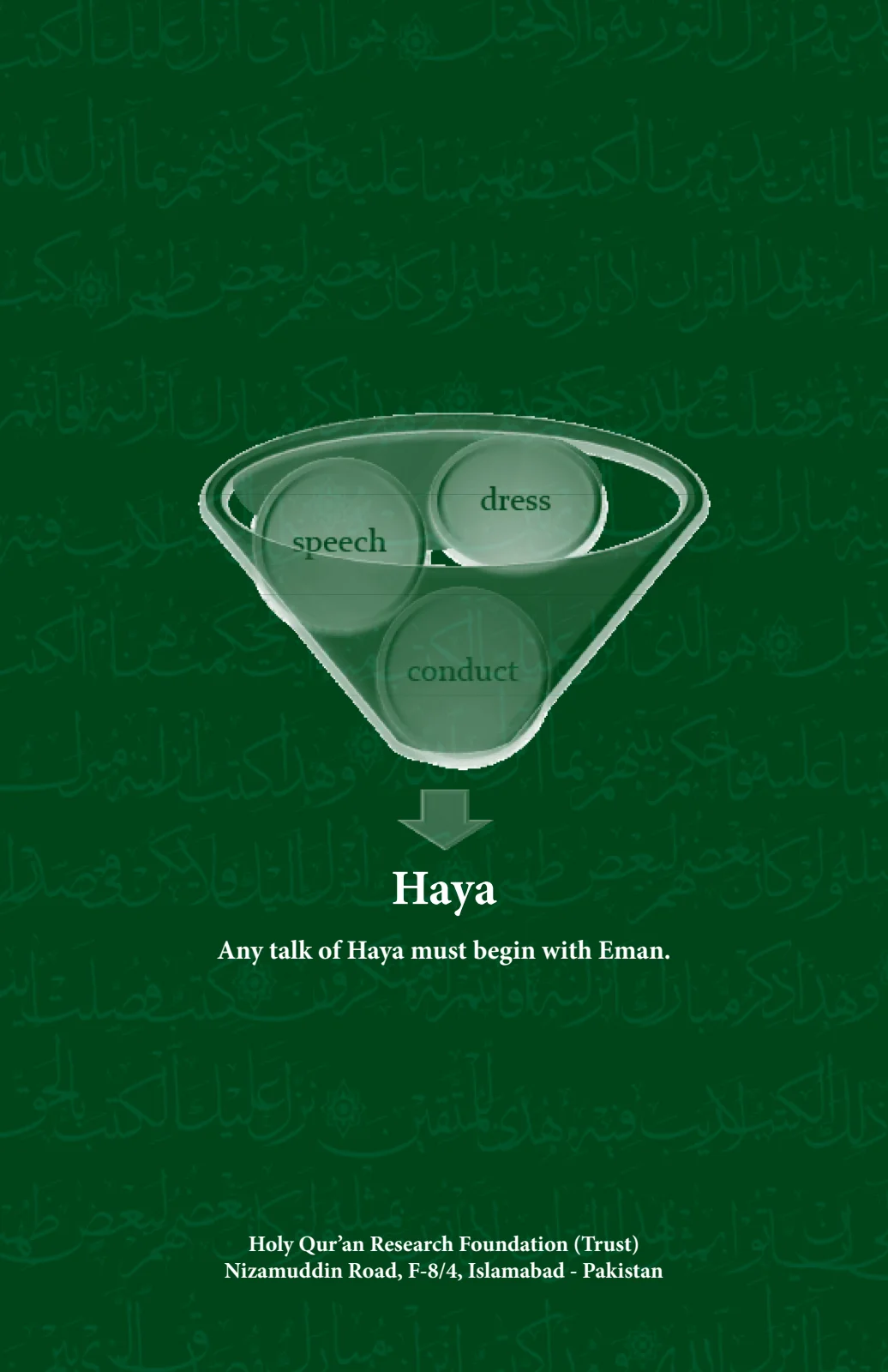
Most conversations about modesty begin at the hemline. This paper argues that the Qur'an begins somewhere else entirely — with the heart, the gaze and the attitude — and that the dress follows from there rather than standing in for it.
Free to read and free to download — no account needed.
Veiling the Attitudes · 16 pages
Abstract
The Qur'an, this paper argues, envisions a society in which men and women respect one another and help one another toward nearness to Allah — and haya is the disposition that makes such a society possible. Its teachings on modesty exist to protect dignity, integrity and self-esteem, not to diminish them.
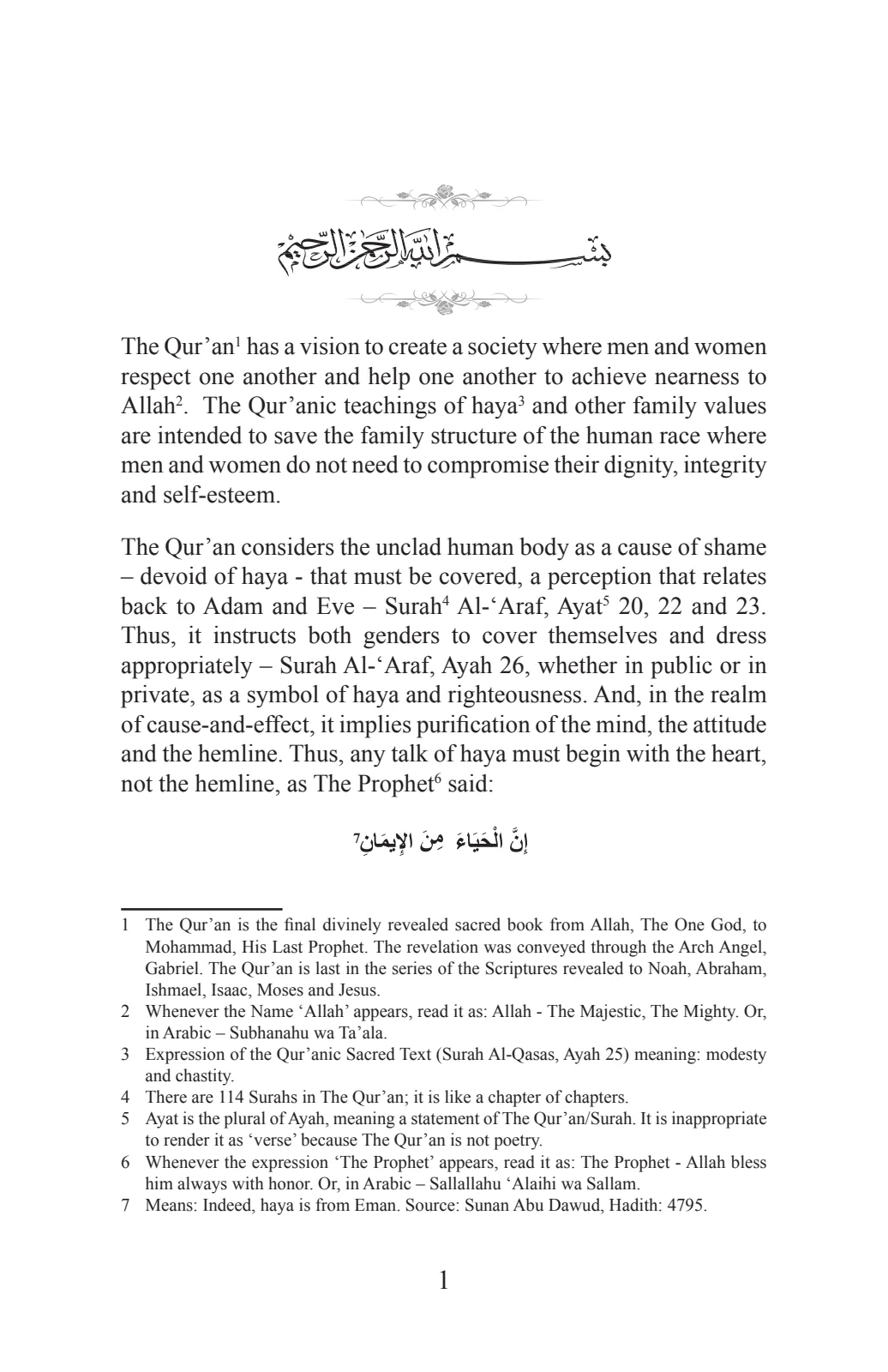
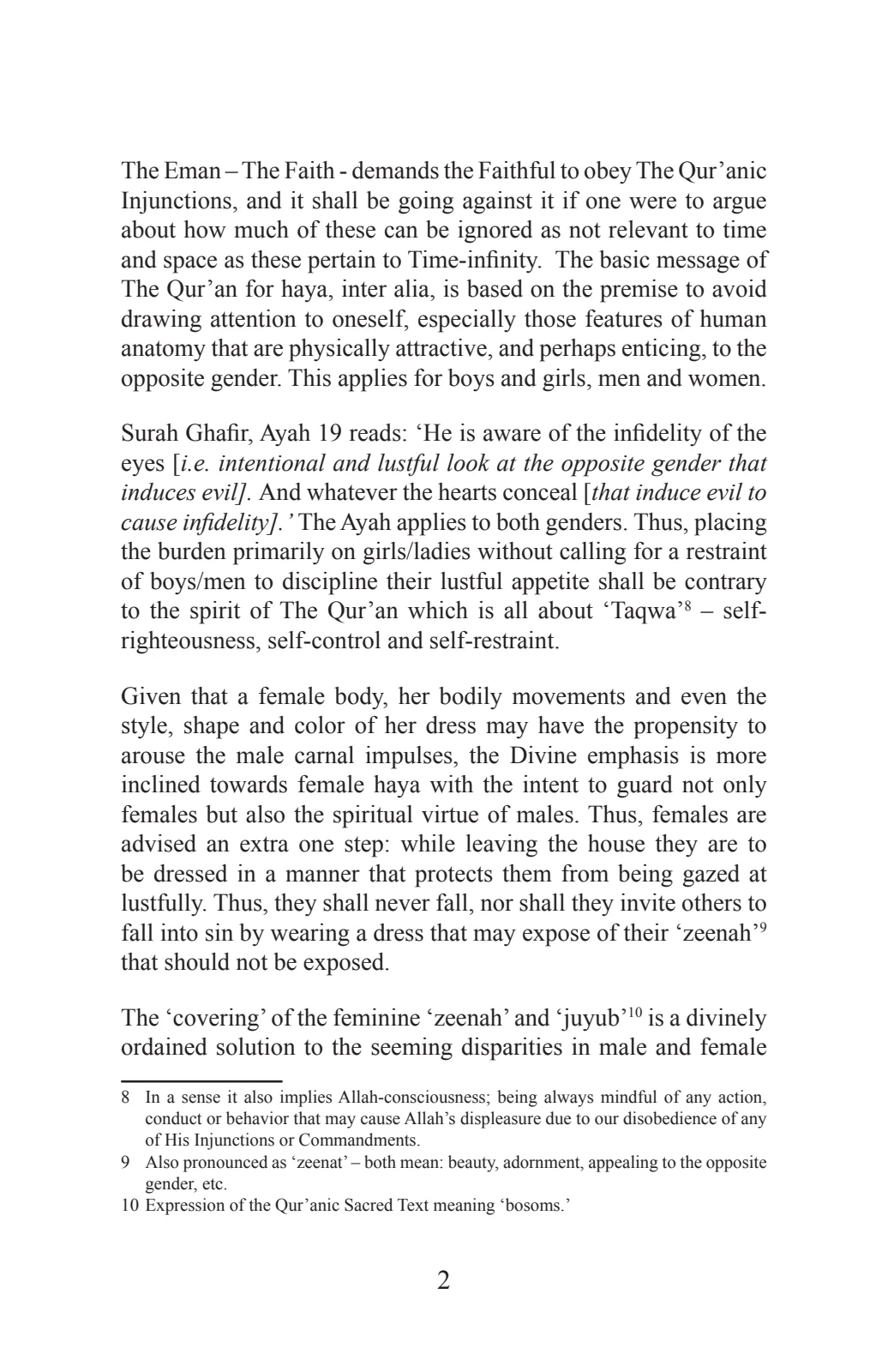
Starting from Adam and Eve in Surah Al-A'raf, the study shows that the instruction to dress appropriately is addressed to both genders, and that it rests on an inward premise: avoid drawing attention to oneself, and guard the gaze — for Allah is "aware of the infidelity of the eyes" (Surah Ghafir 19). In the realm of cause and effect, the paper holds, purification of the mind and the attitude necessarily precedes purification of the hemline.
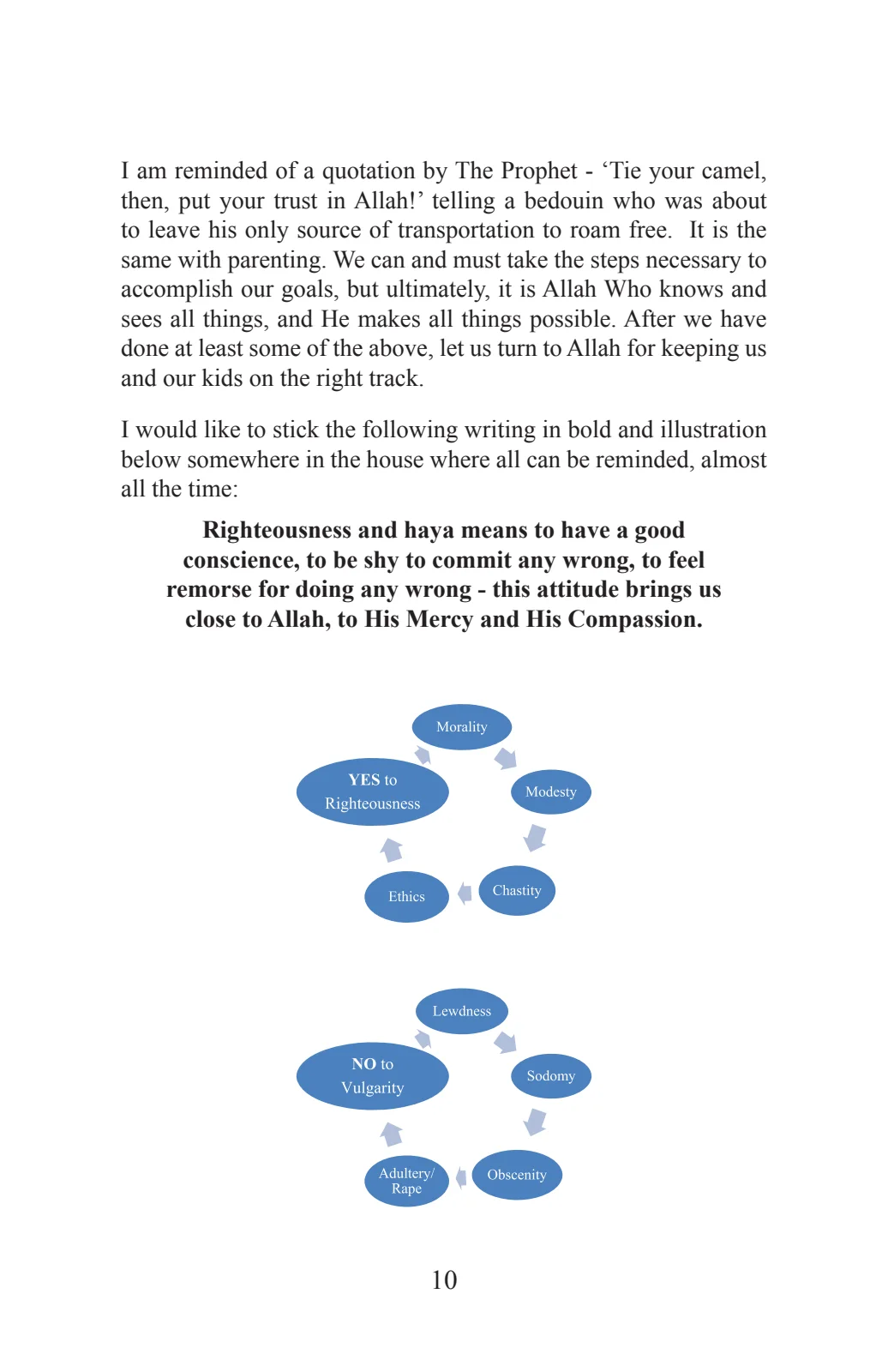
From there it turns to the terms at the centre of centuries of debate — zeenah, juyub, khumr — and observes that the focus of Surah Al-Noor 31 and Surah Al-Ahzab 59 falls on the result: preserving a woman's dignity and shielding her from harassment. A substantial practical section then addresses parents directly, on media and gadget use, role models, household adab and honest self-assessment.
The closing pages take up a difficult contemporary question candidly: what of women who face harassment, mockery and discrimination at work and in public precisely because they observe hijab? Drawing on the recognised place of necessity and circumstance in Islamic law — including Caliph 'Umar's suspension of the penalty for theft during famine — the paper invites reflection rather than issuing a verdict, and returns finally to its own thesis: any talk of haya must begin with Eman.
What the paper covers
Why haya begins with the heart and with Eman — long before it reaches the hemline
The Qur'anic foundation: Al-A'raf 20–26, Ghafir 19, Al-Noor 31 and Al-Ahzab 59
Modesty as an obligation on both genders — men and women, boys and girls alike
Zeenah, juyub and khumr — the long debate over what the terms actually require
Practical guidance for parents: media, gadgets, role models and honest self-assessment
Adab within the home — privacy, elders and the etiquette of visiting (Al-Noor 59, 61)
Hijab, harassment and dignity in secular social and workplace settings
Necessity and circumstance in Islamic law — the precedent of Caliph 'Umar during famine